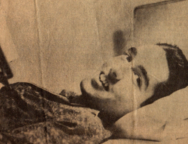
Author Archive
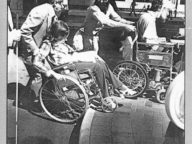
The Independent Fall 1974
Archive Entry Date: Fall 1974
Four disability rights activists celebrate victory by rolling over an "official" curb cut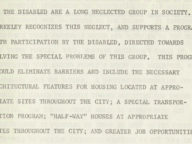
People of Berkeley: A Policy Revised
Archive Entry Date: August 1974
Planning commission changes its tune, recognizes need for a specific disability program with action-oriented goals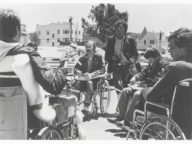
ARCH101 Students with Clients on Sproul
Archive Entry Date: 1974-1976
On a sunny day, Ray Lifchez and students actively listen to disabled consultant's POV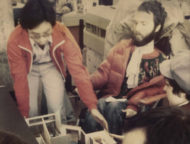
Peter Trier in the ARCH101 Studio
Archive Entry Date: 1976
In the revolutionary design studio, Peter Trier helps students confront stereotypes about disability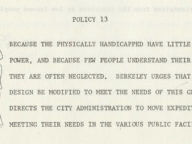
The People of Berkeley: A Policy
Archive Entry Date: November 1973
Berkeley Planning Commission: "Because the physically handicapped have little political power..."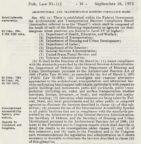
Rehab Act of ’73: Section 502
Archive Entry Date: 9/26/1973
In response to dismal federal access compliance, U.S. government creates an enforcement board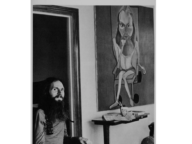
Portrait of Peter Trier
Archive Entry Date: 1973
An advanced thinker reflecting on the terms of Berkeley's disability culture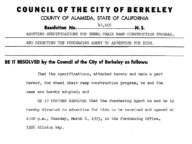
Resolution 45,605
Archive Entry Date: 2/13/1973
In a win for the CIL, Berkeley mandated construction on Telegraph Ave's first wheelchair-accessible route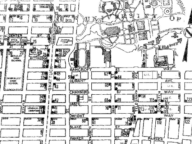
Wheelchair Ramps 1973 Location Map
Archive Entry Date: Summer 1972
A plan, devised by Ruth Grimes and others, to make South Berkeley and downtown accessible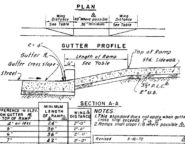
Hale’s Design for a Curb Ramp
Archive Entry Date: 10/1/71
For Hale Zukas, building ramps out of plywood and duct tape was just the beginning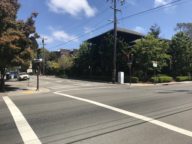
Corner of Dwight and Dana
Archive Entry Date: c. 1971
A historic intersection remembered as the site of experimental ramping by two access revolutionaries
Design for Independent Living
Archive Entry Date: 1979
An overview of this radical design manual and ethnographic study of Berkeley's crip culture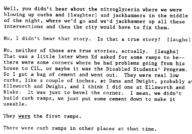
Oral history of Eric Dibner
Archive Entry Date: 1968-1970
A disability rights activist on the guerrilla actions taken, and not taken, to make curb cuts in Berkeley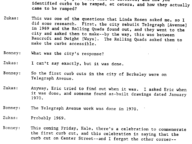
Selection from Hale Zukas’s Oral History
Archive Entry Date: 1997
Hale Zukas recalls the first official curb cuts in Berkeley — and his role in designing them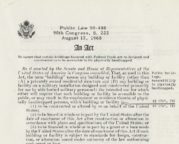
Architectural Barriers Act
Archive Entry Date: 08/12/1968
A landmark piece of federal access legislation -- though one with big loopholes
Ward’s Island Aerial View
Archive Entry Date: 1968
Ray Lifchez spent five years working as an architect for state institutions, like Manhattan Psychiatric Facility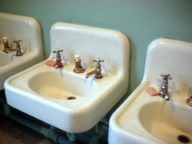
Fixtures at Ward’s Island
Archive Entry Date: 1968
An early experience that set Ray on the path of rethinking design